Change the Room, Not Just Your Mind
Every year, ambitious entrepreneurs and high-performing professionals promise themselves that this will be the year they wake up earlier, eat better, post consistently, scale their business, delegate more, stop procrastinating, or finally take care of their health. And yet, statistics show that nearly 80% of New Year’s resolutions fail within the first month. In a video I watched recently, Jonny Thomson explained that the problem is not laziness. It is not a lack of intelligence. And it is not a lack of ambition. The problem is that most of us misunderstand how change actually works.
He mentioned an article for the Institute of Arts and Ideas, written by the philosopher Matt Haug, which revisits a powerful idea from Aristotle about self-control. Aristotle described two different types of people when it comes to discipline. The first is the enkrateic person - someone who resists temptation purely through willpower. They see the open box of chocolates and force themselves to say no. They want it, but they fight it. The second is the sophron person - someone whose desires are already aligned with their goals. They are not battling temptation because they no longer want the thing that conflicts with their long-term vision.
© Leticia Gaidon Bradford Photography
This distinction is crucial not only for entrepreneurs and professionals, but for all individuals who want to improve their lives in one way or another.
Why Willpower Fails High Achievers
Most driven people pride themselves on being strong-willed. They believe success is about pushing harder and overriding discomfort. But sheer willpower is exhausting. It requires constant internal negotiation. Every decision becomes a small battle. Should I scroll or create? Should I sleep or work?
According to both Aristotle and Haug, relying solely on willpower is the hardest and most fragile strategy. It works for a short time, but eventually the mind gets tired. And when it gets tired, it chooses comfort.
If you are building a business, leading a team, or managing clients, you already use significant cognitive energy every day. Adding constant self-battles on top of that is unsustainable.
Environment Is Stronger Than Motivation
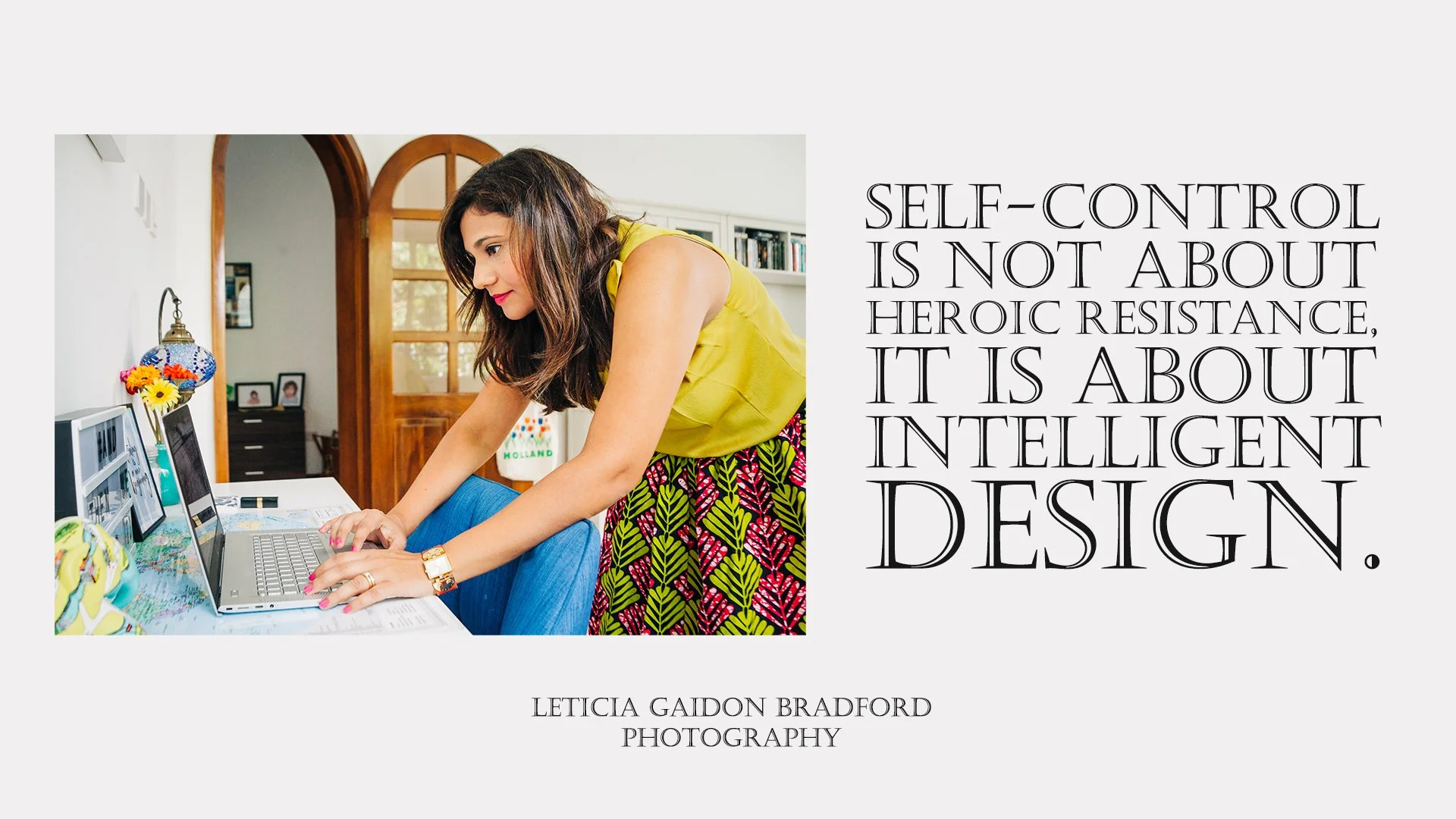
Self-control is not about heroic resistance, it is about intelligent design.
Haug argues that instead of trying to overpower temptation, we should reduce or remove it entirely. This shifts the focus from inner strength to outer structure. Self-control becomes less about personality and more about architecture.
For example:
Delete the distracting app instead of promising to use it less.
Remove junk food from your office instead of trying to resist it daily.
Stop attending environments that trigger habits you are trying to break.
Build routines that make the right choice automatic.
As entrepreneurs, we understand systems in business. We automate, delegate, streamline, and optimise. Yet when it comes to personal growth, we often rely on raw motivation instead of systems.
The truth is that your environment shapes your behaviour more than your intentions do.
I remember reading Seneca and being surprised to find that he was already writing about how the environment defines us. This is why we have to be strategic and careful about the people we surround ourselves with and the things we bring into our homes.
You Are Not Weak - You Are Overstimulated
Many professionals quietly criticise themselves for lacking discipline. But we are living in a high-tech, hyper-stimulating world designed to capture attention and trigger impulses. Notifications, algorithms, advertising, and constant connectivity are engineered to override long-term thinking.
You are not broken. You are a human nervous system placed in an environment that did not exist a century ago.
The solution is to redesign your surroundings so that your best choices become the easiest ones.
Growth for Entrepreneurs: Change the Room
If you want to scale your business, improve your health, elevate your personal brand, or become more consistent, stop asking, “How can I be more disciplined?” and start asking, “What needs to change in my environment?”
Does your workspace encourage focus or distraction?
Do the people around you support your growth or dilute it?
Is your schedule structured around priorities or interruptions?
Does your digital environment reflect your goals?
The secret to sustainable growth is not constant self-wrestling. It is alignment.
Do not try to become a different person overnight. Change the room you are in. Change the systems you operate within. Change what is visible, accessible, and normal in your daily life.
Even when life gets complicated, remember that you are doing this for the long term. A misstep is not the end of everything you have built. Return to your path and keep walking to reinforce the new habit.
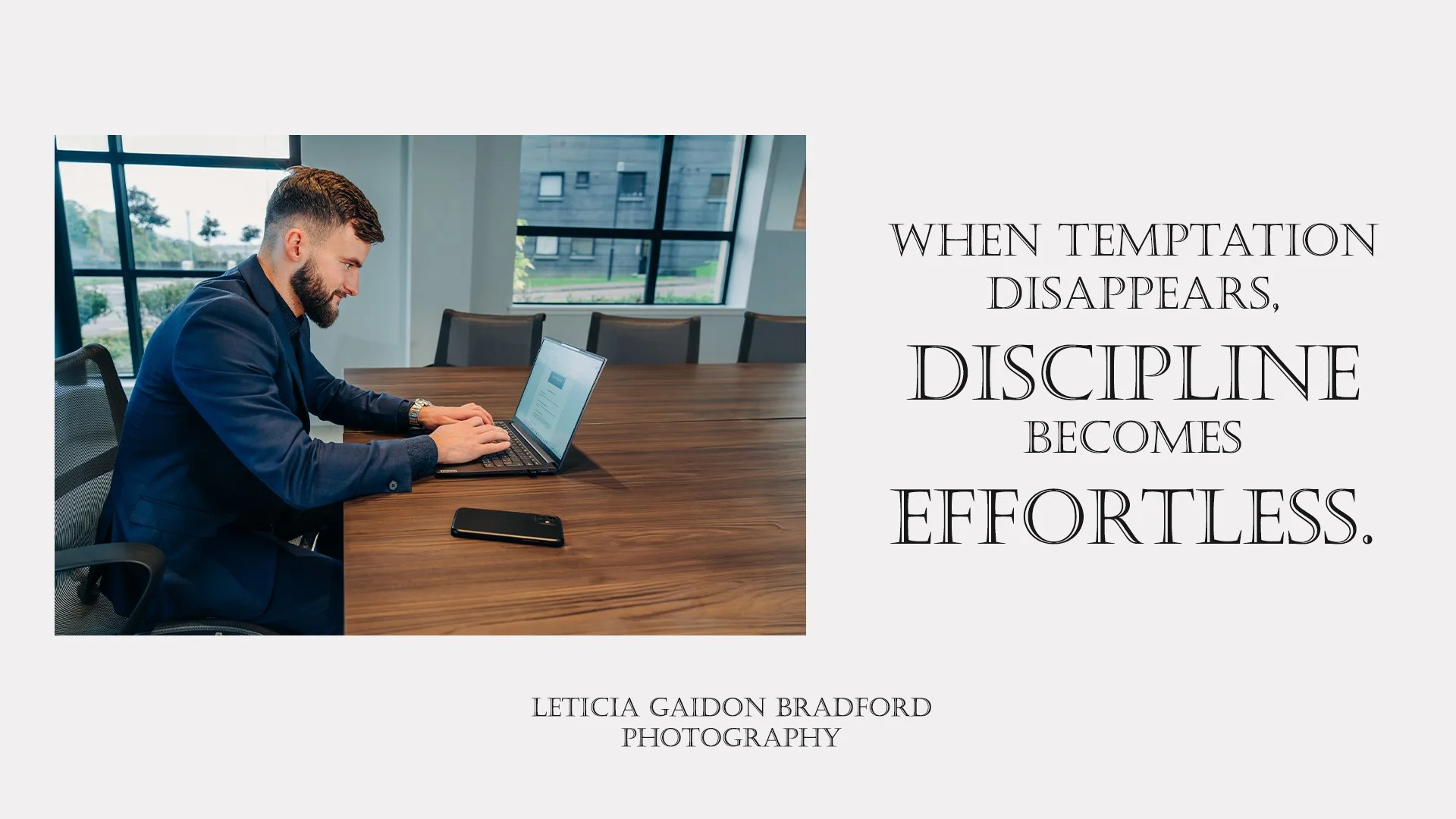
When temptation disappears, discipline becomes effortless. And when discipline becomes effortless, growth becomes natural.
Book your free consultation today and discover how professional photos can elevate your brand.
Follow me in Instagram. Connect with me in LinkedIn.
Thank you for reading.
Bye for now.